
Transaction Advisory Services for M&A and PE Advisors

Authored by
Varun
Date Released
14 Jul, 2026
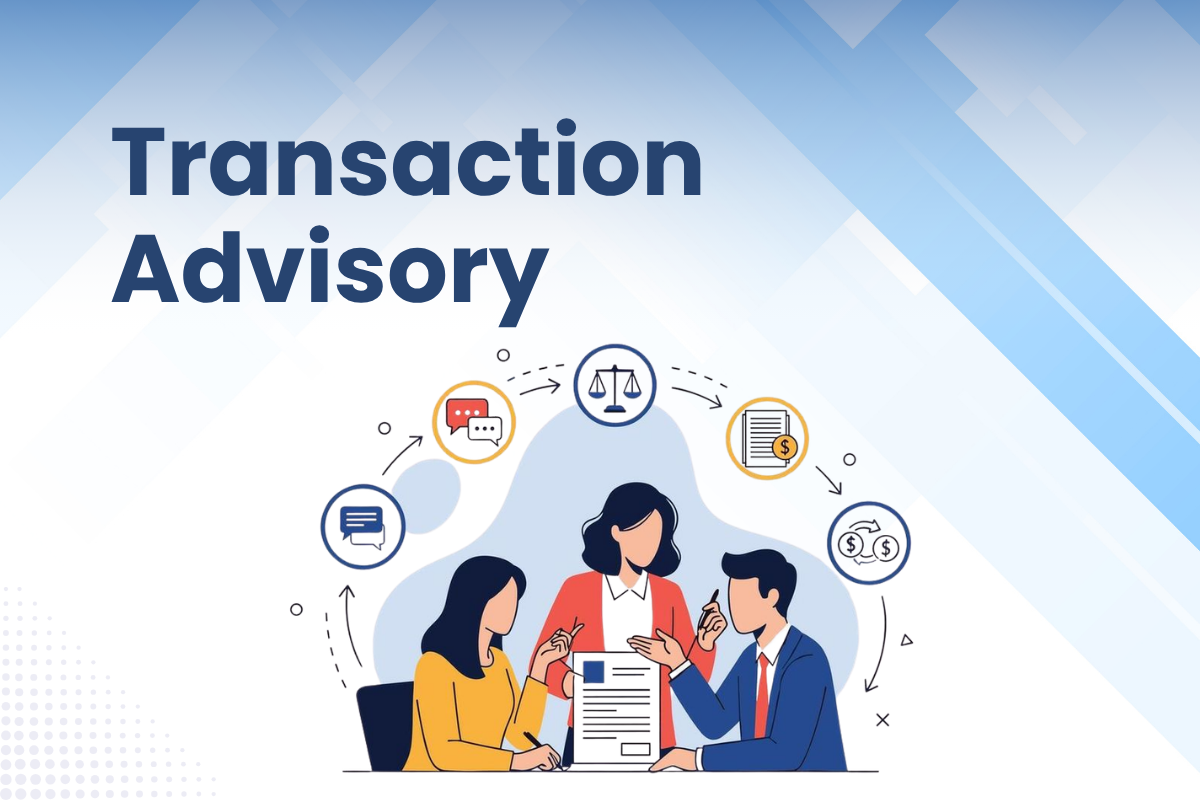
Transaction advisory services help companies make better decisions before, during, and after a major deal. For an investment banker, M&A advisor, transaction advisor, or PE consultant, however, the pressure is different. The client relationship and the judgment remain with you, but the execution still has to get done — the CIM, teaser, pitch deck, valuation, three-statement model, DCF or LBO model, diligence schedules, and every revision that follows.
That is where capacity becomes the real constraint. Most advisors are not short on deal opportunities; they are short on the hours required to build client-ready materials across several engagements at once. We know that a good opportunity can turn into a costly mistake if any key details are missed during the early stages.
What are Transaction Advisory Services?
Let us understand what transaction advisory services are. In simple terms, transaction advisory services are the services offered by transaction advisors to support the financial and analytical work required around significant transactions such as M&A, joint ventures, divestitures, restructuring, capital raises, and other strategic transactions.
Additionally, for a transaction advisory, the practical question is not only what transaction advisory services are, but also how the work gets executed under tight deadlines. Financial analysis, valuation, due diligence, scenario modeling, management materials, and deal documentation often have to move in parallel.
The senior advisor owns the client relationship and key decisions, while an execution team builds the underlying analysis and materials.
Transaction advisory services: meaning & definition
A practical transaction advisory services definition covers the analytical and execution support used to evaluate, prepare, and move a transaction forward. Transaction advisory also includes financial due diligence, valuation, financial modeling, deal materials, transaction analysis, and coordination with specialist workstreams such as tax, legal, commercial, or operational diligence.
For investment bankers and M&A advisors, this often results in concrete deliverables rather than abstract advice, as it includes a defensible model, a clean CIM, a concise teaser, a valuation output that answers questions, or diligence documents that are ready for the next stage of the process.
Table of Contents
Transaction advisory vs audit vs investment banking
| Basis | Transaction advisory services | Audit | Investment banking |
|---|---|---|---|
| Main Purpose | It reviews deal risks, financial performance, valuation, and transaction implications | It verifies the accuracy of historical financial statements | It generates capital, executes transactions, manages buyers or investors, and negotiates deal terms |
| Approach | It is future-oriented and decision-driven | It is standard and focused on compliance | It is driven by the market and focused on execution |
| Typical role | Supports diligence, valuation, modeling, and transaction analysis | Ensures that the stated financial information is dependable and accurate | Owns the transaction process, client relationship and positioning, negotiation, and execution |
| Common work | Mostly engaged in financial due diligence, quality of earnings, valuation, and risk evaluation | Verifies financial statements and manages testing and audit findings. | Mostly engaged in pitching financial models, process management, financial modeling, fundraising, and negotiation |
| Timing | Usually takes place before the transaction closes | Usually takes place yearly or quarterly | Starts during deal planning and continues through execution and closing |
How transaction advisory differs from other consulting services
Let us understand how transaction advisory services differ from other general consulting services.
Transaction advisory consulting is tied to a specific transaction and usually works against a compressed timeline. The work has to support a real decision, a live process, or a client deliverable. In contrast, general consulting focuses on broader strategy, operations, or performance improvement without the same deal-specific deadline.
Transaction advisory is also multidisciplinary. Finance, accounting, tax, valuation, legal, commercial, and operational specialists all contribute to the process. For the advisor managing the engagement, the main challenge is coordination — making sure that the financial analysis, models, diligence outputs, and presentation are all ready on time without personally creating every file.
What Types of Transactions Do Advisory Services Cover?
The different types of transaction advisory services support transactions, such as M&A, divestitures, joint ventures, restructuring, IPOs, and capital market transactions. For an advisor, the scope of transaction advisory services is to create a different mix of analysis and execution work.
Mergers & acquisitions (M&A) advisory
M&A transaction advisory services involve target analysis, financial due diligence, valuation, financial modeling, deal structuring analysis, and transaction materials.
For an investment banker or M&A advisor, the execution burden often includes building and updating models while also preparing documents for buyers, sellers, lenders, or investment committees. A dedicated transaction advisory bench focuses on building work while the senior advisor stays focused on the process, client communication, and judgment calls.
Divestitures & carve-outs
Divestiture transaction advisory often requires separate financial analysis, separation assumptions, valuation work, and materials that explain the business being sold. Historical information may need to be reorganized, carve-out assumptions documented, and multiple transaction scenarios modeled.
For the advisor, this can create a heavy production load, particularly when a CIM, teaser, buyer materials, and model updates are all moving at the same time.
Joint ventures & strategic alliances
Joint venture advisory involves investment analysis, financial models, scenario testing, valuation of contributions, and analysis of ownership or return structures. The execution work has to make the underlying economics easy for senior decision-makers to understand.
An execution team supports the modeling and scenario analysis, whereas the advisor focuses on structuring discussions and the commercial relationship.
Reorganization & restructuring
Restructuring transaction advisory is for firms that need to rework their finances or operations because the current setup is no longer working properly. Here, transaction advisory services involve cash-flow analysis, debt schedules, 13-week models, scenario planning, asset analysis, and stakeholder materials.
When the situation is time-sensitive, the difficulty is not in knowing what analysis is needed; rather, it is in producing accurate, review-ready work quickly enough to support decisions.
IPOs & capital market transactions
IPO transaction advisory and capital markets transaction advisory services involve detailed financial analysis, forecasting, valuation, management materials, and investor-facing support. Regulatory, legal, and tax requirements are typically handled by the relevant specialists, while financial execution teams support the underlying models, schedules, and materials used throughout the process.
Core Services Offered by Transaction Advisory Firms
The core services of transaction advisory firms include financial due diligence, valuation, financial modeling, transaction analysis, and support across the deal process. For advisors, the key issue is how much of that work requires senior judgment and how much can be delegated to a reliable execution layer.
Financial due diligence
Financial due diligence transaction advisory examines revenue, expenses, debt, cash flow, working capital, forecasts, and other financial information to identify issues that affect the transaction. Additionally, they check the quality of earnings, recurring versus one-time items, working-capital requirements, and forecast assumptions, which frequently feed directly into valuation and negotiation.
For an advisor, diligence findings also need to be converted into usable outputs. That means updating a model, adjusting valuation assumptions, preparing a diligence summary, or reflecting findings in a CIM or other client material.
Business valuation & financial modeling
Business valuation transaction advisory commonly uses methods such as DCF, precedent transactions, comparable company analysis, and other valuation methods. The calculation itself is only part of the work. Assumptions have to be linked correctly, scenarios need to be tested, and the output has to be clear enough to use in a client discussion.
Building a defensible valuation means running several analyses in parallel. Add a three-statement model, transaction cases, sensitivity tables, or an LBO model, and M&A modeling support quickly becomes one of the biggest demands on an advisor's weekly schedule.
Deal structuring & transaction advisory
Deal structuring & transaction advisory turn analysis into decision support. Models test consideration structures, debt levels, ownership outcomes, returns, working-capital adjustments, or different operating assumptions.
But the advisor still owns the judgment and the discussion with the client. A strong execution team ensures the underlying model and supporting schedules are ready when those discussions happen.
Tax advisory & regulatory compliance
Tax advisory transaction services and regulatory analysis are two specialist areas that can significantly impact a transaction. They should be handled by the appropriate tax, legal, and regulatory professionals. The finance execution layer supports these specialized workstreams by keeping the financial model, assumptions, schedules, and transaction resources consistent with the findings provided by those specialists.
Post-transaction integration support
Post-transaction integration involves reporting, financial models, operating plans, and performance monitoring once a deal is closed. Broader integration work may span people, systems, tax, legal, and operations, while the finance team helps ensure the financial implications are reflected consistently in forecasts and management reporting.
What Goes Into a CIM, Teaser, or Deal Model
For advisors, transaction advisory becomes much more practical when viewed through the deliverables that are needed to reach the client, buyer, lender, or investment committee.
CIM and teaser preparation
CIM and teaser preparation require more than entering numbers into a template. The financial story, market context, company positioning, key metrics, charts, and supporting analysis all need to align with the model and with each other.
A teaser communicates enough to create interest without overwhelming the reader. A CIM goes much deeper, often combining historical performance, forecasts, market information, operating drivers, management commentary, and transaction positioning into one coherent document.
Pitch decks and transaction materials
Pitch decks, buyer materials, management presentations, and diligence summaries evolve as the transaction progresses. Every model update triggers changes anywhere else. That is why execution capacity matters — the work is rarely a one-time build. It is an ongoing cycle of updating, checking, formatting, and turning revised analysis into client-ready material.
Three-statement, DCF, and LBO models
Three-statement models form the operating backbone for many transaction analyses. DCF models translate assumptions into valuation. LBO models add financing, debt paydown, exit assumptions, and return calculations. Depending on the transaction, advisors may also need 13-week cash-flow models, scenario analysis, or tailored transaction structures.
The value of M&A modeling support is not simply speed. It has a team that can build, update, stress-test, and format the analysis while the senior advisor remains in control of the assumptions and conclusions.
Diligence materials
Diligence materials include financial schedules, variance analysis, working-capital analysis, debt and cash schedules, quality-of-earnings support, scenario outputs, and other transaction-specific work. A reliable transaction advisory bench helps keep these materials consistent with the model and with the story being presented to the client.
Transaction Advisory Process: Start to Finish
Phase 1: Pre-transaction — feasibility & preparation
The transaction advisory process begins before the deal is live. In pre-transaction advisory, the advisor evaluates strategic fit, reviews financial information, develops valuation ranges, tests scenarios, prepares a pitch, or identifies what information will be required once the process begins.
This stage is often where the first capacity bottleneck appears. An advisor may be pursuing a new mandate while still executing two or three existing ones. Without execution support, new opportunities mean late nights, slower turnaround, or work being turned away.
Phase 2: Deal execution — due diligence & financial modeling
Once the transaction is active, deal execution advisory becomes more intensive. Financial, commercial, tax, operational, legal, technology, and people diligence runs in parallel, each through the relevant specialists. At the same time, models, valuations, CIMs, teasers, pitch decks, and diligence materials continue to change as new information arrives.
This is where deal execution support becomes especially valuable. The advisor can continue to own the client relationship, process, and senior judgment while the transaction advisory bench handles the build, updates, and first-pass analysis beneath them.
Phase 3: Post-transaction — integration & monitoring
The finish line is not closing the deal. In many ways, that's where the real work begins. Post-transaction advisory includes financial reporting, integration models, forecasts, synergy tracking, and performance monitoring.
The specific work depends on the transaction and the advisor's mandate, but the same principle applies: senior time is most valuable when it is focused on interpretation and decisions rather than repetitive production.
How Transaction Advisory Services Identify & Manage Deal Risks
Advisors look at a target from several angles, not just the numbers, because transaction advisory risks can emerge from financial performance, operations, compliance, people, reputation, technology, or assumptions embedded in the deal model. Risk management transaction advisory services therefore depend on both specialist judgment and disciplined analysis.
For advisors, execution quality matters because a missed assumption or inconsistent schedule can flow directly into valuation, negotiation, or the way the deal is presented.
Financial & operational risks in transactions
Financial-risk transaction advisory typically reviews earnings quality, cash flow, debt, working capital, forecasts, and liabilities that affect valuation or transaction terms. Operational findings may also change assumptions about costs, synergies, or future performance.
The execution challenge is to make sure those findings are reflected consistently across the model, valuation, diligence materials, and client presentation.
Regulatory & compliance risks
Regulatory compliance transaction advisory is particularly important where a deal crosses borders, enters a regulated sector, or involves sensitive assets and data. Legal and regulatory specialists determine the implications, while the financial workstream reflects potential costs, timing changes, or transaction conditions in the model.
Managing cultural fit, HR challenges & reputational risks in deals
Cultural risks, transaction advisory, and people-related diligence can affect retention assumptions, integration costs, and the expected value of a transaction. These issues sit outside the financial model initially, but they often have financial consequences that need to be incorporated into scenario analysis or post-close planning.
Technology & cybersecurity risks in deals
Technology risks in transaction advisory may affect integration costs, future capex, operating risk, and the timing of synergies. Cybersecurity findings may also influence warranties, remediation requirements, and closing conditions. Again, the finance execution layer helps translate those findings into updated assumptions and transaction outputs.
Benefits of Hiring a Transaction Advisory Firm
For M&A and PE advisors, the benefits of transaction advisory services go beyond the analysis of an individual deal.
The right execution support gives the senior advisor additional capacity to manage modeling, diligence, valuation, and transaction materials across several engagements without allowing production work to consume the time needed for client relationships and judgment.
These transaction advisory service advantages become especially important when deal activity increases. A dependable execution bench can help prepare CIMs, teasers, financial models, valuation analyses, and diligence materials while the advisor remains focused on negotiations, strategic decisions, and client communication.
Expert guidance & independent objective advice
Transaction advisory services benefits include having experienced finance professionals available to test assumptions, review financial information, and support the analytical work behind a transaction.
For an investment banker or M&A advisor, this means that detailed execution does not have to run entirely through the senior team. Independent transaction advisory support can help challenge forecasts, analyze earnings and cash flow, test valuation assumptions, and identify issues that affect pricing or deal terms.
The advisor still owns the judgment and the client relationship, while the execution team helps ensure that the underlying analysis is complete, consistent, and ready for senior review.
Specialized industry knowledge & deal expertise
Transaction advisory services also bring experience that helps teams understand the revenue drivers, cost structures, operating assumptions, and valuation considerations that differ from one industry to another.
Experienced industry expertise transaction advisory teams can apply that knowledge when building models, reviewing assumptions, preparing diligence materials, or developing transaction documents. This can make it easier to identify sector-specific risks and focus analysis on the issues that are most likely to affect valuation or deal structure.
For advisors managing several transactions at once, that additional deal experience can reduce the amount of time spent rebuilding analytical work from the ground up for every engagement.
Improved decision-making & risk identification
Better execution also gives senior advisors clearer information on which to base their recommendations.
Risk identification transaction advisory work examines earnings, cash flow, debt, working capital, liabilities, forecasts, and other assumptions that influence transaction value. Financial models then test different scenarios and show how changes in those assumptions affect valuation, financing requirements, or returns.
This allows the advisor to spend less time assembling the underlying analysis and more time interpreting what it means for the client.
Smooth deal execution & consistent client-ready materials
One of the most practical advantages of transaction advisory services is the ability to keep multiple workstreams moving at the same time.
CIM and teaser preparation, three-statement models, DCF and LBO models, valuation analyses, pitch decks, and diligence materials can all require substantial execution time. When every deliverable depends on the senior advisor personally building or updating it, deal volume quickly becomes a capacity problem.
A dedicated transaction advisory bench allows much of that production work to happen beneath the advisor, while the advisor retains control over the assumptions, conclusions, and client-facing recommendations.
Where post-close analysis is required, deal integration advisory support can also help organize financial reporting, performance monitoring, and the analytical work needed to compare actual results with the assumptions made during the transaction.
How M&A and PE Advisors Scale Deal Capacity Without Hiring
The biggest constraint for advisory practices is not demand; it is the amount of execution that still runs through senior people. An advisor may be able to win another mandate, but that mandate can bring weeks of model updates, CIM and teaser preparation, diligence analysis, buyer materials, and revisions.
Hiring ahead of demand creates fixed costs and management overhead. Doing everything internally can limit the number of deals the senior team can carry. A transaction advisory bench creates another option: keep the relationship, judgment, and client-facing work with the advisor while moving repeatable execution to an already-built team.
More capacity without turning senior people into production resources
Senior advisors create the most value in client conversations, positioning, negotiations, and judgment calls. When those same people are also rebuilding models, formatting pitch materials, and processing every diligence update, the practice becomes difficult to scale.
Deal execution support separates those two layers. The advisor remains responsible for the answer; the execution team helps build the work that gets the advisor there.
An embedded team rather than another hand-off to manage
The strongest model is not simply transferring work away. An execution partner can operate inside the advisor's existing systems, templates, tools, domain, and processes so the work looks and feels like an extension of the advisor's own team.
This matters when deadlines are tight and deliverables have to follow established formatting, assumptions, and review conventions. A good transaction advisory bench should reduce coordination rather than create another management task.
Where TAG fits
The Algebra Group (TAG) works alongside investment bankers, M&A and transaction advisors, PE consultants, and other finance practitioners who manage the client relationship and senior judgment.
Our in-house transaction and investment advisory capability includes financial modeling and valuation analysts, CIM, teaser and pitch-deck support, market research, and design resources under one roof.
The deliverables we support include CIMs, teasers, pitch decks, three-statement models, DCF and LBO models, valuations, 13-week models, and diligence materials. The broader TAG bench also has exposure across sectors, including renewables, defense, manufacturing, professional services, e-commerce, and others.
The point is not to replace the advisor, but rather, it is to provide an execution bench beneath the advisor's judgment so more deals can move at once.
5 Signs Your Advisory Practice Needs More Deal Execution Capacity
Knowing when to add transaction advisory support is often less about the size of one transaction and more about whether production work is starting to limit the practice.
1. You are turning away mandates because the team is already full
When attractive opportunities are being declined because existing deals consume all available modeling and production capacity, the constraint is execution bandwidth rather than demand.
2. Senior team members are spending too much time building files
When senior bankers or advisors are personally updating models, formatting decks, and processing diligence schedules late into the night, valuable judgment time is being used on work that can often be delegated with the right review process.
3. CIMs, models, and diligence packages are moving at the same time
Parallel workstreams create the biggest strain. One deal may need a CIM update, while another needs a valuation refresh, and a third is deep in diligence. A transaction advisory bench gives the advisor capacity across all three.
4. You need specialist modeling support only at certain points in the deal cycle
Even demand is rarely perfectly steady. A firm may need heavy M&A modeling support for several weeks and then much less. An external execution bench can absorb that variability without requiring a permanent hire for every peak.
5. Growth is starting to depend on adding headcount before the revenue is certain
If every new client requires another hire before the engagement is won, growth becomes tied to fixed operating costs. An already-built execution team can create capacity before the practice commits to adding permanent internal headcount.
How to Test a Deal Execution Partner Before a Live Engagement
Choosing execution support should not mean risking a live client relationship. A better test is to use work you already know.
Take a CIM, model, valuation, teaser, or similar project your team has previously completed and ask the prospective partner to re-deliver it. Then compare the result against your own finished work.
Look at more than the numbers. Review the quality of the analysis, formatting, communication, attention to instructions, consistency with your templates, and the questions the team asks when something is unclear.
This approach provides an advisor with a practical way to evaluate a transaction advisory bench before introducing it into a live engagement. It also tests whether the team can work to the advisor's standards rather than forcing a general process.
TAG uses this exact approach to de-risk a first engagement. A prospective partner can send a previously completed project and compare TAG's output side by side, with no live client at risk.
Conclusion
Transaction advisory services create value only when strong analysis can be turned into accurate, client-ready execution under real deal deadlines. For investment bankers, M&A advisors, and PE consultants, the challenge is finding enough capacity to build the CIMs, teasers, models, valuations, and diligence materials across several engagements without allowing execution to consume the time needed for judgment and client relationships.
That is the role of a transaction advisory bench — not to replace the advisor, but to provide the execution layer beneath them.
If you want to see how TAG would work with your process, send over a CIM, model, valuation, or other transaction project your team has already completed. TAG can re-deliver it so you can compare the quality, communication, and formatting side by side before putting a live client at stake.
Related Blogs



Common
Questions
Your Guide to Transaction Advisory...
Transaction advisory services are the financial, analytical, and execution support used around transactions such as M&A, divestitures, restructurings, and capital raises. An advisor includes due diligence analysis, valuation, financial modeling, CIM and teaser preparation, and other deal materials.
A transaction advisory firm can support financial due diligence, valuation, modeling, transaction analysis, and related execution work. For investment bankers and M&A advisors, an external transaction advisory bench can also provide the build capacity needed to prepare and update transaction materials under the advisor's direction.
The different types of due diligence include financial DD, legal DD, operational DD, commercial DD, tax DD, HR DD, and IT DD. Different specialists typically own each area, while the advisor brings the findings together for the transaction and reflects relevant conclusions in valuation, modeling, and deal materials.
The biggest difference between transaction advisory and investment banking is the role that they play. Transaction advisory services operate deeply in financial due diligence, valuation, financial analysis, and modeling. Investment bankers typically own the client relationship, transaction process, positioning, buyer or investor outreach, negotiation, and closing. In practice, an investment banker uses transaction advisory support as an execution layer beneath the deal process they lead.
The answer to when to hire transaction advisory service support is usually when deal execution begins to limit capacity: senior people are spending too much time building files, several deals are moving at once, turnaround is slowing, or the firm is turning away opportunities because the internal team is full. That is usually the point where deal execution support or a transaction advisory bench can create leverage without requiring an immediate permanent hire.