
Will AI Replace Accountants? What Changes and What Doesn’t

Authored by
Varun
Date Released
14 Oct, 2026
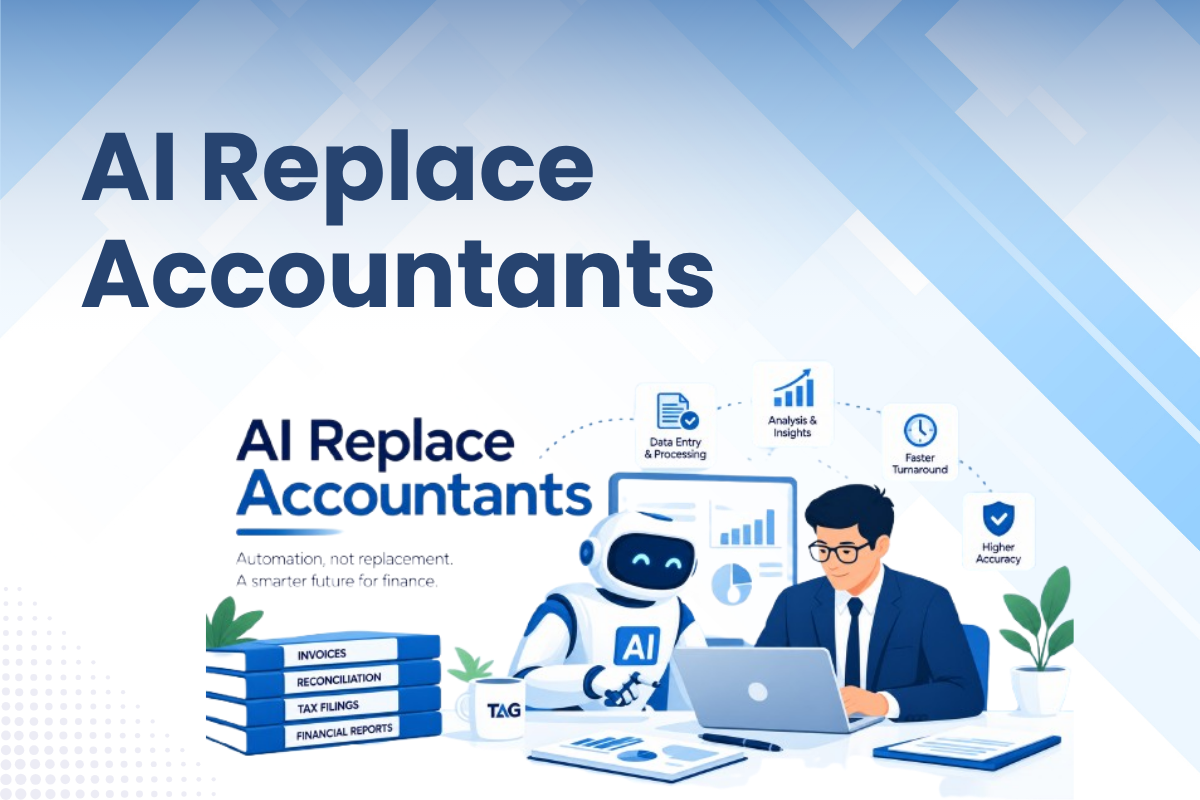
AI (artificial intelligence) is changing how finance work gets done. Bank reconciliations can be automated, transactions can be categorized in seconds, and financial reports can be drafted without anyone building every line by hand. So the question many accountants and firm owners are asking is a fair one: will AI replace accountants?
The short answer is no, but the job is changing. AI can make accounting work faster, yet it cannot take responsibility for the numbers. Producing a financial report is one task. Knowing whether those figures are correct, complete, and trustworthy enough to put in front of a client is another.
Will AI Replace Accountants? The Short Answer
AI can take over much of the recurring, rule-based work in accounting, which is why so many people ask whether it will replace the people who do that work.
Will accounting be replaced by AI? No. What changes is where accountants spend their time. With routine processing automated, they can focus on reviewing results, handling exceptions, and making the decisions that clients are actually paying for.
Why so many people are asking this question
AI can process documents in seconds, and that speed makes it look like a replacement. But a fast answer is not always a correct one. A tool can duplicate a revenue entry, miss an adjustment, or overlook a reconciliation issue without any sign that something went wrong.
That is why human skill and experience still matter. AI-generated output needs an accounting professional to verify results, resolve errors, and confirm that the numbers reflect the client’s actual position. Many experts are asking whether AI is going to replace accountants, and the more useful question is who checks the work once AI has done the first pass.
Table of Contents
Will Accountants Be Replaced by AI, or Will the Job Just Change?
The job is changing more than it is disappearing. An accountant whose day is mostly data entry and moving figures between systems will see the biggest shift as automation takes over that work. An accountant who analyzes the data, produces the results, advises clients, and stands behind the conclusions is far less likely to be replaced by AI.
Accounting work has several layers. AI can handle some of them, but it cannot take responsibility for an entire engagement.
What AI is actually automating right now
Is AI replacing accountants? The more precise question is what it is actually automating today. For example, a CPA firm can use automated transaction rules to handle routine expenses across many clients. That saves time and lets the team focus on unusual figures and odd transactions that need investigation.
The AICPA and CPA.com 2025 AI in Accounting Report describes AI as reshaping the profession and pushing firms toward more advisory work, rather than as a simple replacement for accountants.
What AI Can Already Do in Accounting
AI already takes over a lot of the manual work in recurring accounting tasks. It does not remove the need for professional accountants.
Transaction categorization and data entry
AI transaction categorization tools can extract data from invoices, describe transactions, recognize regular vendors, and assign accounting categories based on historical records. This saves accountants time on recurring work, but the tool does not always understand the accounting context.
For example, an AI categorization system may treat a client’s equipment purchase as an ordinary operating expense because the vendor is a regular one. The vendor is familiar, but the accounting treatment is different, since the purchase may need to be capitalized. A professional review confirms that the chosen classification actually makes sense.
Bank reconciliation and matching
AI can match bank transactions to ledger entries, flag duplicates, and surface unmatched items across many client accounts. This is the mechanical part of reconciliation, and AI-assisted tools handle it well.
What AI cannot do is explain why a record does not match or decide whether an adjustment is needed. That is why the question of whether AI will replace bookkeepers has a more nuanced answer than a simple yes or no. Much of the matching work is being automated, while accountants and bookkeepers remain responsible for explaining how a difference affects the financial statements and whether it needs to be corrected.
First-pass reporting and dashboard commentary
Automated financial dashboards help accounting firms and fractional CFOs track changes in cash flow, spending, gross margin, and revenue before the numbers go to the client. The accountant’s value goes up when they challenge the automated first-pass commentary.
Consider a report that says gross margin improved significantly this month. AI can point to the accounts behind the improvement. But it may not know about adjustments made in a previous period or about expenses that were reclassified. The commentary can sound trustworthy and still fail to explain the real reason the margin moved.
Will AI Take Over Accounting Completely?
AI will keep taking on more accounting work, but will AI take over accounting completely? That is much harder to justify.
Accounting involves more than processing the information already in a system. It requires evaluating what is missing, applying professional judgment, and accepting responsibility for the result. When asking whether AI can take over accounting, three limitations deserve attention.
Completeness: what a prompt doesn’t think to ask
An AI system works only from the prompt and the data it is given. Suppose a fractional CFO asks it to update a projection using the latest financial information. The model may revise expense assumptions based on revenue growth and produce a clean set of numbers. But it may skip an adjustment that management agreed on in the previous month-end meeting. The output looks complete, and it is not reliable.
A professional accountant looks beyond the request itself. They consider earlier decisions, data that is missing from the current report, and unusual adjustments.
Judgment on numbers that don’t make sense
AI can produce a number that is arithmetically fine and still makes no sense. It takes an experienced accountant to catch that and flag it, which is why review stays central even as the work gets faster.
For controllers and fractional CFOs in particular, this judgment is a core part of the service they provide.
Client trust and accountability
Client trust rests on the accounting professional’s responsibility for the work. Imagine a CPA firm presents month-end performance, and the client asks about an unexpected movement in expenses. The firm is responsible for explaining the accounting treatment by going back to the source records and reviewing the issue.
AI helps with research and analysis, but it cannot carry the contractual and regulatory responsibility of an engagement.
Will Accounting Jobs Be Replaced by AI, or Just Reshaped?
The work that’s changing vs. the work that isn’t
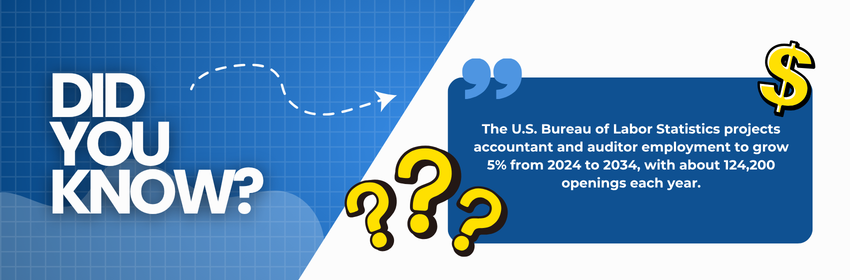
The U.S. Bureau of Labor Statistics projects employment of accountants and auditors to grow 5% from 2024 to 2034, faster than the average for all occupations, while projecting a 6% decline for bookkeeping, accounting, and auditing clerks. Projections are not guarantees, but that split is consistent with what is happening in the work itself. Data entry and matching are the most exposed to automation, while review, interpretation, and advisory work are becoming more important.
So is accounting going to be replaced by AI? Parts of it are being automated, and the parts that depend on judgment and accountability are not.
Will CPAs Be Replaced by AI?
Will licensed CPAs be replaced by AI? AI supports financial reporting, technical research, audit-related work, document review, and tax preparation, and it makes those tasks faster. But a tool cannot replace a CPA’s experience, license, ethical obligations, or duty to protect client data.
AI can perform analysis. It cannot take on an engagement that requires professional licensure, and it does not take responsibility for its own results.
Why signing off on the numbers still needs a licensed professional
Not every accounting report needs a CPA’s signature, but some engagements do require oversight by a licensed professional. AI can help tax preparers by checking supporting evidence, but the professional holds the license and makes the judgment calls.
The IRS Office of Professional Responsibility has made the same point for tax practice. Its guidance on AI (OPR Alert 2026-19, June 2026) confirms that Circular 230 duties such as due diligence, competence, and confidentiality apply when tax practitioners use AI. In other words, accountability stays with the professional, and AI is there to improve efficiency.
Will AI Replace Accountants by 2030?
Predictions about whether AI will replace accountants by 2030 do not give firms a reliable basis for planning. Projections like the Bureau of Labor Statistics’ 5% growth outlook for accountants and auditors through 2034 are not guarantees, and they describe the occupation as a whole rather than individual tasks. They say little about which tasks will be automated.
What the future holds for a CPA or accounting firm depends on the expertise and specialization of its people, not on the tool alone. Firms should adopt automated workflows while keeping the expertise needed to review the results.
What’s likely to change in the next few years vs. what won’t
Over the next few years, reconciliation, draft reporting, forecasting support, and first-pass explanations will likely become more automated. Questions such as whether the financial information is complete, how a transaction should be treated, and why the numbers do not agree will stay important.
As AI raises workflow efficiency, the review process has to improve too, especially when a CPA firm takes on more clients. The firms that benefit most combine automation with a reliable process for documentation, execution, and revision.
AI vs. Human Accountants: Where Each One Wins
| What AI Does Well | What Still Needs a Human Accountant |
|---|---|
| Speed, volume, and first-pass processing | Checking completeness and handling exceptions |
| Structuring and cleaning financial data | Ensuring accuracy and client-ready presentation |
| Flagging anomalies and unusual transactions | Investigating what those anomalies actually mean |
| Drafting financial reports | Interpreting results and providing recommendations |
How the Accountant’s Role Is Changing, Not Disappearing
From producing every line to reviewing exceptions
As automation handles more first-pass processing, the accountant’s time shifts from producing every line to reviewing exceptions, checking completeness, and deciding what the numbers mean.
More time for advisory and client conversations
The AICPA’s CEO has said AI will change what an accountant does rather than disrupt the profession, and the AICPA and CPA.com 2025 report points to firms moving toward more advisory work. For practitioners, that means more of the day goes to client conversations and judgment, and less to production.
Where TAG Fits: Automation With a Human Review Layer
AI is making accounting work faster, so the challenge for fractional CFOs, CPAs, and controllers is making sure the results are accurate, complete, and ready to deliver to clients.
TAG (The Algebra Group) is an already-built finance function that works as an execution layer beneath fractional CFOs, controllers, and CPA firms. It combines FP&A, financial modeling, accounting, and reporting with automation and experienced review.
How TAG uses automation across accounting and FP&A work
TAG uses automation in financial modeling, data structuring, first-pass analysis, and reporting. Its in-house team has built AI bots and agents for internal and client workflows.
For example, automation may organize financial information and speed up model preparation, but TAG’s accounting and FP&A professionals review the output, look for inconsistencies, and prepare deliverables that match the client’s requirements.
TAG’s white-label CFO dashboard comes as part of an accounting or FP&A engagement, connects to the client’s accounting system, and carries the practitioner’s own branding. TAG works as an embedded team inside the client’s workflows and systems rather than operating as a separate vendor.
Why the review layer is what clients are actually paying for
AI can prepare a financial model, report account movements, or draft an analysis quickly. But in accounting, speed alone does not matter. For example, an automated projection might carry forward an unusually high revenue month. The calculation looks fine, but the forecast is wrong. This is where accounting professionals earn their place: they notice the variation, check the assumptions, and make sure the model reflects a realistic expectation.
For a fractional CFO or CPA firm owner, the benefit is therefore not simply a finished spreadsheet. It is a finance execution team that understands the targets and works within the firm’s established processes. The practitioner keeps leading the client relationship and exercising professional judgment, with TAG’s execution beneath it.
Test it yourself before committing
Choosing a finance execution partner should not rest on what the partner says it can deliver. It should rest on how its work holds up against your own standards.
TAG offers a practical way to test the fit without involving a live client. Send TAG a project you’ve already completed. TAG redoes it, so you can compare quality, communication, and formatting without putting a live client at risk.
Startup Financial Planning & Growth Insights
1
How Financial Modeling Helps Startups Grow Smarter
›
2
How FP&A Drives Better Financial Decisions
›
3
Accounting and Bookkeeping Services
›
4
How Corporate Finance Supports Sustainable Growth
›
5
What a Fractional CFO Really Does for Small Businesses
›
6
How Ratio Analysis Reveals Business Performance
›
7
How Variance Analysis Improves Financial Planning
›
Conclusion: AI Will Change Accounting, Not Replace Its Value
Automation is changing how accounting firms, fractional CFOs, CPA firms, and practitioners work. Most of the change is in the efficiency of routine tasks, but fast results only matter if they are accurate, which is why professional expertise stays in demand.
TAG combines automation with an execution layer and human judgment. Ready to see the difference? Send TAG a project you’ve already completed. We’ll redo it so you can compare the results before committing to anything.
Related Blogs



Common
Questions
Your Guide to AI in Accounting...
Much of the transactional layer of bookkeeping, such as categorization and matching, will likely keep being automated, and the U.S. Bureau of Labor Statistics projects employment of bookkeeping, accounting, and auditing clerks to decline 6% from 2024 to 2034. What stays valuable is review: catching exceptions, correcting treatment, and explaining the numbers to clients.
Parts of tax preparation are being automated, but tax advice, judgment calls, and responsibility for the return stay with the practitioner. The IRS Office of Professional Responsibility has confirmed that Circular 230 duties such as due diligence and competence apply when AI is used.
No, but the work is changing. AI is taking over more of the repetitive production, while review, judgment, and client advice stay with accountants. The question for most CPA firms, fractional CFOs, and accountants is how to use AI while keeping the expertise needed to check its output.
Accountants and CPA firms should learn to bring AI tools into their existing processes and build skills that are hard to automate, such as financial analysis, financial decision-making, quality control, and client communication.