
AI Accounting Automation: Benefits, Tools & How It Works

Authored by
Varun
Date Released
28 May 2026
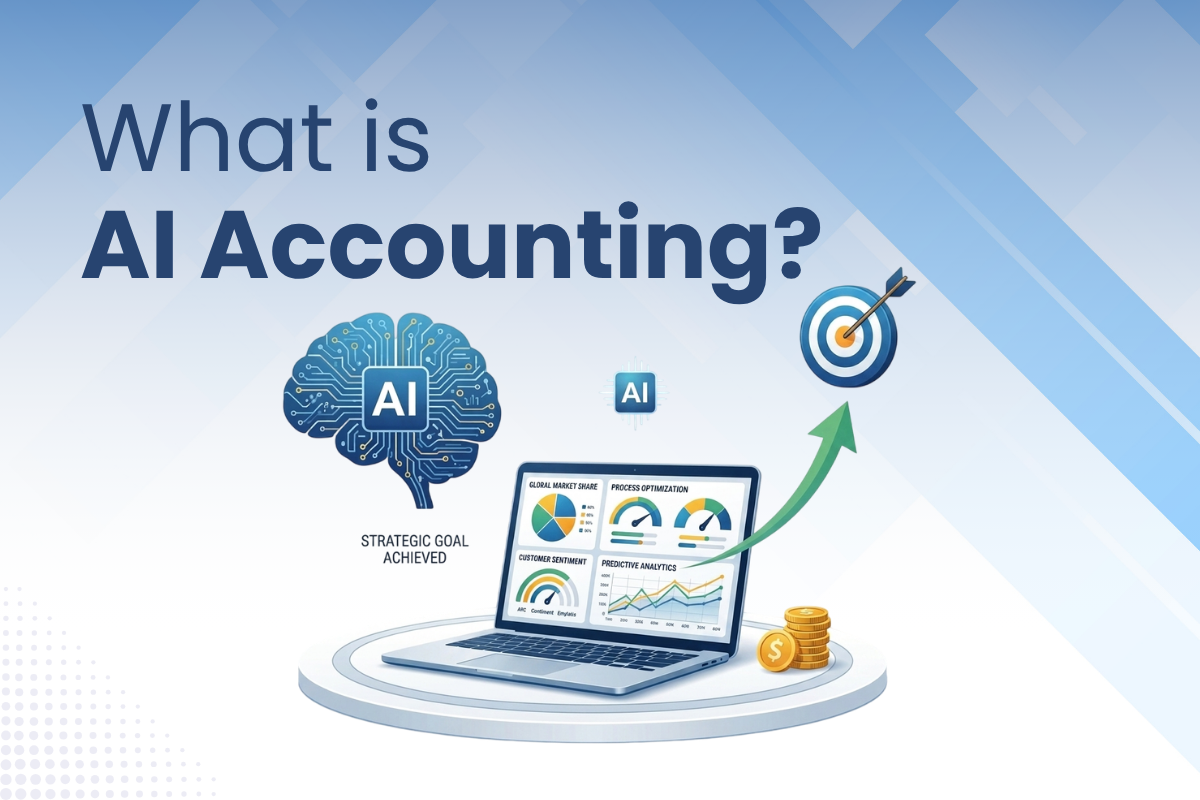
Spending hours preparing spreadsheets or waiting to get invoices approved? Manual accounting processes and data entry slow down your financial operations. AI accounting automation applies artificial intelligence and machine learning to help finance teams execute processes faster, smarter, and with greater accuracy. AI accounting automation goes beyond repetitive task automation and involves clever AI accounting tools to automate ordinary tasks, minimize human error, and provide actionable financial conclusions and operational insights in real-time.
Table of Contents
What is AI Accounting Automation?
AI accounting automation uses advanced software to help people automate repetitive tasks. These tasks include handling invoices, generating reports and journal entries. Automation reduces the likelihood of human errors, improving the reliability of these processes. This allows accountants to focus on higher value activities such as strategy, analysis, and interaction with clients. So, rather than replace accountants, AI is assisting accountants.
AI Accounting Automation Definition
Artificial intelligence in accounting refers to the use of AI technologies such as machine learning (ML) and natural language processing in core accounting functions. Examples of these functions include data analysis, financial reporting, auditing, regulatory compliance, and fraud detection in accounting practices.
Difference Between AI and Accounting Automation
AI vs. automation accounting is a continuing topic since the advent of artificial intelligence. It is important to understand that accounting automation and AI accounting are two different things.
- Accounting automation usually means automating normal accounting processes such as invoice processing, data entry, bank reconciliation and payroll calculations using workflows — which reduces errors, avoids manual handling, improves processing efficiency and strictly adheres to programmed conditions and rules.
- In contrast, AI accounting involves the use of technologies such as machine learning, natural language processing, and predictive analytics to spot anomalies, analyze financial data, identify patterns, and generate informed insights. Unlike automation tools that merely comply with rules, AI systems extract information from past accounting data and consistently enhance their decision-making capacities.
Role of AI in Digital Accounting Transformation
Digital accounting transformation powered by AI is changing how financial control, compliance, reporting, and decision support work is done — moving accounting from spreadsheets and manual records to clever data management and data-driven finance operations in the cloud.
AI technologies including machine learning, robotic process automation and statistical analytics are enabling finance teams to automate manual processes in the areas of invoice management, bookkeeping processes, accounts receivable, audit, payroll, and expense reporting.
The main advantage of AI accounting innovation is that it rapidly provides real-time financial data from large amounts of structured and unstructured data, increasing financial visibility while reducing manual errors and reporting time, and allowing for effective calculated decisions through access to accurate, real-time data. Automation with artificial intelligence provides for continuous auditing and compliance by monitoring transactions, issuing alerts on transaction anomalies, and checking regulatory compliance.
Thus, as enterprises continue to digitalize, AI becomes a calculated layer of the modern accounting ecosystem. Companies that take advantage of AI-enabled accounting tools experience benefits such as scalability, better forecasting, reduced financial close times, and increased visibility of operations, thereby allowing finance to become a more planned partner to the business.
How AI Accounting Automation Works
Advanced accounting process automation platforms rely heavily on advanced technologies such as machine learning, deep learning, optical character recognition, and predictive analytics.
Machine Learning in Accounting Data Processing
Machine learning accounting systems play a key role in automating accounting transaction processing and data management. ML algorithms assess past accounting records in order to automate everyday bookkeeping processes, identify trends, and categorize transactions with a high level of accuracy. AI financial data processing intelligently categorizes expenses, matches invoices with purchase orders, identifies suspicious or duplicate transactions, and reconciles accounts. Over time, these systems get advanced by learning from accountant input and historical financial transactions, which reduces manual corrections and boosts operational effectiveness.
Deep Learning Applications in Accounting
Advanced financial operations are being reshaped by deep learning accounting use cases that allow systems to execute complex financial analysis and document interpretation tasks. It consists of a layered neural network that processes large financial datasets, detects hidden patterns, and supports modern automation capabilities. Artificial intelligence deep learning is used in the accounting industry for fraud detection, audit analytics, processing invoices, predictive forecasting, and document processing. Deep learning is also being explored for credit scoring, risk assessment, and auditing analytics — for wider datasets such as non-customary sources of information, deep learning models provide more accurate credit risk profiles, helping banks and lenders manage risk more effectively.
AI-Based Financial Data Analysis
Advanced AI accounting analytics tools help businesses transform raw financial data into actionable financial insights. AI-driven financial analysis systems evaluate a large volume of financial records in real time to determine trends, forecast results, and support strategic decision-making. With the help of predictive analytics and clear algorithms, organizations can generate reliable AI financial insights related to cash flow financial forecasting, budgeting outcomes, revenue trends, profitability analysis, and operational risks. Thus, AI-based financial data analysis helps finance teams detect unusual transactions, provide real-time financial visibility into financial performance, faster reporting, and improve financial planning accuracy.
Accounting Tasks Automated Using AI
AI Invoice Processing Automation
With automated invoice processing, AI workflows such as vendor onboarding, accounts payable, and expense management can be accomplished using AI technologies like RPA and AI agents. AI invoice automation software streamlines and avoids time-consuming tasks such as document handling and manual data entry. The accounting process is automated by AI/machine learning and OCR scanning, which is used to capture invoice data headings and line items digitally.
AI Expense Management Automation
Manually entering expense reports and tracking down receipts are two of the most traditional wastes of time. AI expense automation has changed the picture completely. AI expense tracking accounting apps like Dext or Hubdoc simply take a picture of a receipt or forward an email, and the program will automatically extract the necessary information — including vendor, date, and amount — and transmit the information directly to your accounting software. This reduces the time required to manually enter data, avoids the possibility of human errors, and provides real-time visibility of company performance.
AI Tax Compliance Automation
AI tax automation helps to remain on top of tax regulations while ensuring accurate bookkeeping, which is ideally complex and demanding. With the support of AI tax compliance software, tasks such as data entry, generating reports, and reconciling accounts get simplified. It also reduces the risk of errors and ensures compliance with tax laws while benefiting teams with the time to focus on complex financial management.
AI Financial Reporting Automation
The standard form of financial analysis and reporting usually involves compiling data, creating spreadsheets, and generating reports by hand, which takes time and is prone to errors. Automated reporting accounting transforms such tasks by automating data collection, data analysis, and report generation in real time. AI-supported tools identify trends, patterns, and anomalies that manual analysis is likely to fail. AI-driven reporting and analysis visualize key performance indicators and provide real-time insights, helping business staff understand financial performance much better while detecting areas that need improvement.
AI Fraud Detection in Accounting
AI-powered algorithms are efficient at spotting patterns and anomalies that might indicate suspicious activity. AI fraud detection accounting analyzes a large volume of data to detect unusual spending patterns, suspicious transactions, or deviations from predefined norms. Accounting risk monitoring AI detects financial losses and prevents businesses from brand damage. However, AI cannot replace accountants; it assists them and improves their efficiency and productivity by automating repetitive tasks and allowing them to solely focus on detecting potential issues.
Benefits of AI Accounting Automation
Improved Accuracy Using AI in Accounting
AI accounting accuracy is relevant when it comes to the automation of time-consuming and repetitive processes like data entry and transaction processing. This improves efficiency and benefits accountants with error reduction, enabling them to focus on more strategic and value-enhancing activities.
Cost Reduction Through Accounting Automation
Accounting automation cost savings is one of the key AI accounting efficiency benefits; it automates routine tasks and simplifies processes. Besides direct AI accounting effects, it reduces the demand for additional labor with an increase in data volume. Additionally, it minimizes potential human-made errors and revisions, which ultimately reduces operational costs connected with accounting functions.
Faster Financial Decision Making with AI
AI accounting automation offers real-time financial insights, which enables businesses to have updated information and insights. Timely AI financial decision-making and predictive accounting AI facilitate proactive financial management and respond quickly to the changing market conditions and company requirements.
Compliance and Risk Management Using AI
Accounting compliance standards, financial reporting requirements, and tax regulations are changing consistently. By automating AI risk management in finance, AI checks compliance and detects errors and inconsistencies. This process reduces the possibility of non-compliance and mitigates financial and reputational risks for companies.
Top AI Accounting Automation Tools
Top AI accounting tools include QuickBooks, Xero, NetSuite, FreshBooks, Zoho Books, etc.; they support streamlining financial functions, reducing manual work, and improving reporting efficiency.
Features of AI Accounting Software
Advanced AI accounting automation tools involve various automation capabilities like automated invoice processing, predictive analysis, forecasting and budgeting, real-time financial reporting and dashboards, and data extraction. Additional AI accounting software features are tax compliance tracking and report generation, fraud detection, and anomaly identification. AI systems use machine learning algorithms to process massive data sets, identify trends, and generate insights for quick decision-making.
Choosing the Best AI Accounting Tool
AI accounting solution selection is dependent on different factors like industry requirements, size of company, operational complexity, and integration needs. Selection of the best AI accounting software is ideally based on automation capacity, integration with current accounting and ERP systems, data security and compliance standards, pricing and implementation costs, and availability of customer support and training. Platforms such as cloud-based accounting are preferred by companies seeking real-time collaboration, scalability, quick deployment, and strong security controls for crucial financial data.
Integration of AI with Accounting Systems
AI-powered accounting system automation software connects with ERPs, CRMs, payroll systems, banking applications, and payment gateways and centralizes financial data to improve workflow accuracy. AI accounting integration supports businesses by automating financial data synchronization, streamlining accounts payable and receivable, enhancing reporting accuracy across departments, enabling quick forecasting and budgeting, and avoiding manual intervention in bookkeeping processes.
AI, Automation & Smart Accounting Insights
Implementing AI Accounting Automation
For successful AI adoption, accounting demands careful planning and execution.
Assessing AI Readiness in Accounting Teams
Before creating an AI adoption strategy for finance, assess your current accounting process and technology. Determine which processes are ready for automation and which challenges AI can address. For example, accountants struggling with slow invoice processing and manual data entry face difficulty in keeping up with regulatory changes. Companies prepared with AI readiness are taking advantage of automation, including improved accounting and finance functions. For successful AI integration, a thorough assessment of the business's needs and capabilities is a must.
Steps to Implement AI Accounting Automation
AI accounting implementation steps are:
- Describe objectives: Outline goals that the company wants to achieve with accounting AI deployment. Clear objectives help in keeping your implementation focused.
- Select an AI solution: Identify an AI accounting tool that aligns with the identified objectives, budget, and technical capabilities.
- Data preparation: Clean, structure, and format your financial data to be ingested by the model.
- Integrate AI tool: Integrate the AI tool with the current accounting systems and ensure smooth data flow.
- Prepare your team: Provide training to the team on how to use AI software more effectively.
Managing Team Transition to AI Automation
Advanced accounting automation requires effective change management and employee support. AI workforce transformation in finance reduces the time taken by finance teams on repetitive tasks involving data entry, invoice processing, reconciliation, and reporting, leaving them to focus on more forward-looking, analytical tasks. A successful transition involves training accounting professionals in AI tools, establishing clear objectives for automation, beginning simple automation projects, and upskilling professionals to achieve improved productivity and build a better finance workforce.
Challenges of AI Accounting Automation
Data Security Risks in AI Accounting
The implementation of AI in accounting increases security risks as it involves dealing with sensitive financial data. Financial data privacy AI is essential to protect data from illegal access, data theft, and cyber risks. It is the most critical challenge for organizations handling large-volume data sets. Due to such risks, organizations must set up effective data security measures like encryption, secure storage, and access controls to secure critical financial data and comply with relevant data protection regulations like CCPA and GDPR.
Cost and ROI of AI Accounting Automation
AI automation investment in accounting plays a significant role in saving businesses costs; besides that, it reduces the demand for in-house teams with the increase in data volume. AI accounting ROI benefits come from minimizing the potential for human errors and corrections, which reduces the operational costs associated with accounting functions.
Skill Gap in AI Accounting Implementation
There is often a gap in AI accounting skills found in accounting professionals. Hence, upgrading and continuing education training for accountants on AI tools are essential to bridge this skill gap and ensure that accountants and finance professionals are well-trained with skills to leverage AI tools to their potential.
Future Trends in AI Accounting Automation
The future of AI accounting trends is smarter automation and real-time financial visibility, enabling finance operators with improved decision-making. Autonomous accounting is transforming financial functions, such as repetitive tasks and compliance accuracy.
End-to-End Accounting Automation with AI
Full accounting automation AI involves regular tasks such as invoice processing, financial reporting, reconciliations, and audit preparation with less human supervision. Additionally, it supports accountants in improving efficiency, reducing errors, and accelerating financial close cycles.
AI-Driven Strategic Finance Transformation
AI strategic finance transformation helps businesses in transforming their finance operations, shifting from handwritten accounting to strategic finance management. AI tools are helping to advance the future of business automation by providing real-time analytics, forecasting, and financial insights that support quick decision-making, better risk handling, and long-term business growth.
Conclusion
AI accounting transformation is helping accountants and finance professionals to work more smartly, accurately, and strategically. Using AI is not the challenge, but to embed it, train it, and manage the changes are. But the long-term benefits overcome such challenges and allow accountants to concentrate on high-value strategic activities. Development in AI technology plays a very big role in driving smarter financial decision-making and full accounting process automation.